Launching a drinkware brand is an exciting opportunity for startups and retail businesses, but choosing the right products and manufacturing partner can be challenging. From stainless steel tumblers and insulated water bottles to ceramic-lined thermal mugs, today's drinkware market offers a wide range of products for different lifestyles, customer preferences, and retail channels.
For new brands, private label drinkware manufacturing provides a practical way to develop products under their own brand identity without building an entire production operation from scratch. Businesses can select existing product designs, customize colors and logos, evaluate materials, and work with a supplier to develop a product range that reflects their market positioning.
However, successful private label drinkware projects require more than adding a logo to a cup. Product functionality, material selection, customization methods, packaging, order quantities, and production quality all influence the final result.
This guide from Homer Trimmings explains how private label drinkware manufacturing works, what startups and retail brands should consider before placing an order, and how to select suitable drinkware products for different customer groups. It also introduces practical product options, including stainless steel tumblers, ceramic-lined thermal mugs, and titanium insulated cups.
What Is Private Label Drinkware Manufacturing?
Private label drinkware manufacturing is a business arrangement in which a company sells drinkware products under its own brand name while working with an external supplier to source, customize, or produce the products.
Instead of developing every component independently, startups and retailers can select suitable drinkware designs and work with a supplier on product specifications, branding, colors, and packaging. The finished products are then marketed under the buyer's brand rather than simply being sold as generic merchandise.
For example, a new lifestyle brand may choose a stainless steel insulated tumbler, customize its exterior color, add a logo, and develop matching retail packaging. A sports retailer may prefer reusable water bottles with practical lids and portable designs for customers who exercise or travel frequently.
Private label drinkware generally involves several important elements:
- Product selection: Choosing an existing bottle, tumbler, thermal mug, or other drinkware design.
- Material specifications: Confirming the material used for the body, inner lining, lid, and other components.
- Brand customization: Adding logos, printed patterns, brand colors, and other visual elements.
- Packaging development: Selecting suitable individual packaging and retail presentation options.
- Production coordination: Managing samples, specifications, production schedules, and delivery.
For startups, this approach can reduce the complexity of entering the drinkware market. It also allows businesses to test product concepts and build a recognizable product collection before expanding their assortment.
Homer Trimmings offers a range of customizable products through its Cups & Mugs collection, including insulated bottles, stainless steel tumblers, and thermal mugs for different applications.
Why Startups and Retail Brands Choose Private Label Drinkware
Drinkware is used in everyday situations, including commuting, working, exercising, traveling, and relaxing at home. This makes reusable bottles and insulated cups relevant to a broad range of consumer markets.
For businesses, private labeling provides an opportunity to turn a functional everyday product into a branded retail item.
Build a recognizable brand identity
A consistent visual identity helps customers recognize a product across different sales channels. Logo placement, color combinations, surface finishes, and printed patterns can all contribute to brand recognition.
Rather than selling a generic stainless steel tumbler, a retailer can develop a recognizable product with a distinctive color palette and customized design.
Develop products for specific customer groups
Different customers have different expectations. Office workers may prefer compact thermal mugs, while outdoor enthusiasts may look for larger insulated bottles with convenient handles or straw lids. Retail brands can select products according to the lifestyle and purchasing habits of their target audience.
Expand product assortments
Drinkware can complement existing lifestyle, gift, sports, promotional, and home accessory collections. Retailers can introduce different sizes, colors, and designs without necessarily changing their entire product strategy.
Maintain greater control over product presentation
Private label projects allow brands to coordinate product appearance, packaging, and marketing materials. This creates a more consistent shopping experience across online stores, retail shelves, and promotional campaigns.
For businesses developing a coordinated drinkware range, exploring products such as the Premium Vacuum-Insulated Tumbler with Handle & Straw can help identify suitable product styles for home, travel, and outdoor markets.
Choosing the Right Drinkware Products for Your Brand
One of the first decisions in private label drinkware manufacturing is determining which product types best match your brand positioning. A product that works well for an outdoor equipment retailer may not be the right choice for a premium office gift collection.
Before selecting a design, consider the intended usage, target customer, price positioning, product appearance, and customization requirements.
Stainless steel water bottles
Stainless steel bottles are widely used for daily hydration, commuting, sports, and travel. Their practical construction makes them suitable for brands targeting customers who want reusable drinkware for everyday use.
When evaluating a stainless steel bottle, buyers should review the steel grade, wall construction, lid design, capacity, surface finish, and cleaning requirements.
For brands interested in this category, Homer Trimmings offers the Wide Mouth Stainless Steel Bottle with Flex Straw Cap. The product features a double-wall insulated structure, a flexible carrying handle, and a closeable straw cap. Its product details specify cold retention of up to 24 hours.
Insulated tumblers with handles
Large-capacity tumblers with handles and straws have become a recognizable drinkware style for customers who prefer convenient hydration at home, in the car, or during outdoor activities.
These products are particularly relevant to lifestyle brands and retailers looking to develop colorful, visually distinctive drinkware collections.
Homer Trimmings' large-capacity tumbler options feature food-grade stainless steel, double-wall vacuum insulation, a handle, and a reusable straw. Custom logos and patterns are available for bulk orders, making this type of product worth considering for private label projects.
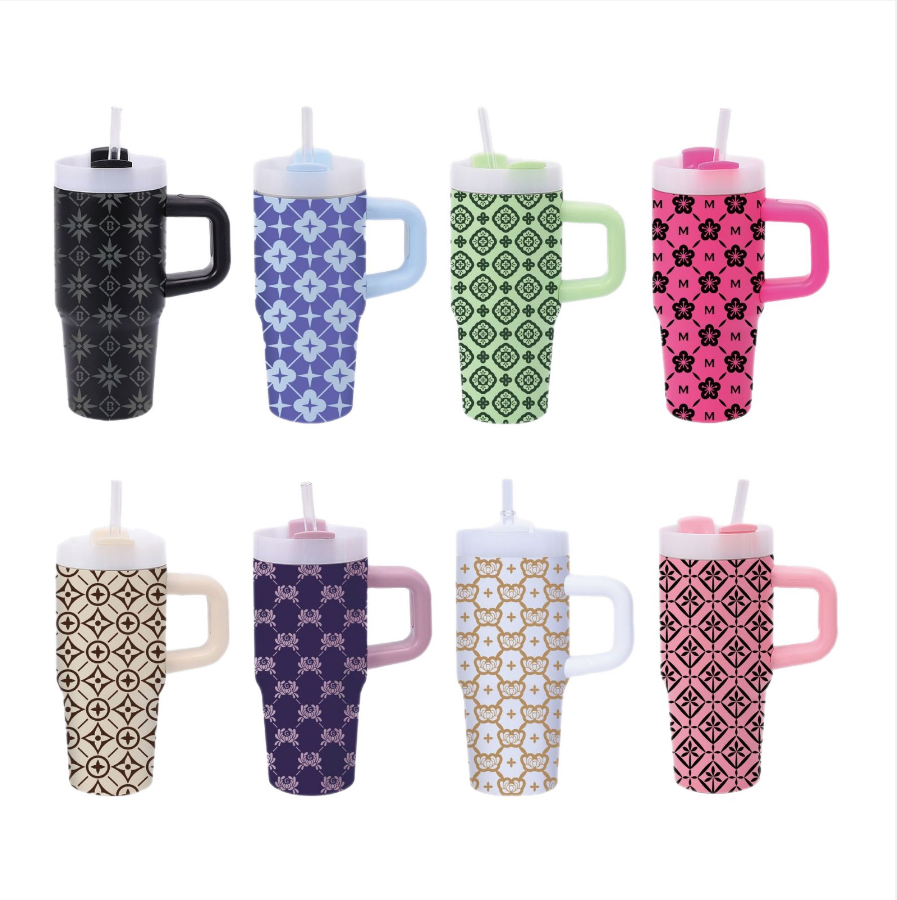
Printed insulated tumblers with different colors and decorative patterns for drinkware collections.
Ceramic-lined thermal mugs
Some customers are particularly sensitive to the taste and feel of beverages stored in metal containers. Ceramic-lined thermal mugs offer an alternative product concept by combining a stainless steel body with a ceramic inner coating.
These mugs can be suitable for office use, commuting, and daily coffee or tea consumption. When developing this type of product, buyers should confirm the inner coating specifications, cleaning instructions, insulation construction, and lid design.
Homer Trimmings' Ceramic-Lined Thermal Mug uses a 316 stainless steel body with double-wall vacuum insulation. Its product specifications also list several color options, including black, silver, light beige, pink, blue, and off-white.
Titanium insulated cups
For brands looking to explore a more distinctive material category, titanium drinkware offers another product direction. It can be positioned within premium, outdoor, travel, or lifestyle collections, depending on the product design and target market.
Material specifications are particularly important here. Buyers should confirm whether the product uses pure titanium on both the inner and outer surfaces or only a titanium component.
Homer Trimmings offers an Internal and External Pure Titanium Thermal Cup. Its product details specify pure titanium on both the inside and outside, a matte finish, customized dimensions, and printing options.
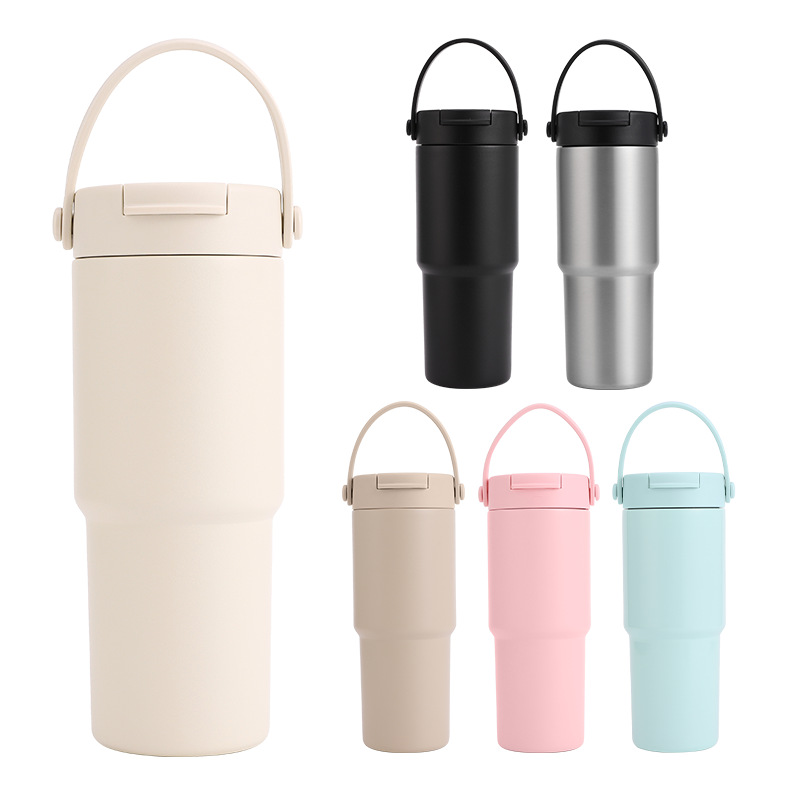
Insulated drinkware designs with different body colors and practical handle structures.
How to Select Drinkware Materials for Private Label Products
Material selection affects more than product appearance. It also influences product positioning, everyday usability, cleaning requirements, and the specifications buyers need to confirm before production.
For private label drinkware brands, the most suitable material depends on the intended product category and customer expectations.
| Material | Main Characteristics | Suitable Product Direction |
|---|---|---|
| Stainless Steel | Durable metal construction, suitable for reusable drinkware | Water bottles, tumblers, travel mugs |
| 316 Stainless Steel | A specific stainless steel grade with corrosion-resistant properties | Premium insulated mugs and bottles |
| Ceramic Inner Coating | Provides a ceramic contact surface for beverages | Coffee mugs and thermal drinkware |
| Pure Titanium | Lightweight metal material with a distinctive premium positioning | Premium travel and lifestyle drinkware |
It is also important to distinguish between the main body material and the material used for the lid, straw, seal, and inner surface. These components have different functions and should be evaluated separately.
For example, a stainless steel insulated tumbler may include a plastic straw lid and silicone sealing components. A ceramic-lined mug may use a stainless steel exterior while providing a different inner contact surface.
Before confirming a bulk order, request the complete material specifications rather than relying only on the product's general material description.
Private Label Drinkware Customization Options
Customization is one of the most important parts of developing a private label drinkware collection. A standard product design can become a recognizable branded item through carefully selected colors, logos, patterns, and packaging.
The available customization methods depend on the drinkware material, surface treatment, product structure, and supplier capabilities.
Logo printing and branding
A logo is often the first visual element customers notice. Depending on the product and surface, branding may involve screen printing, offset printing, laser marking, or other suitable decoration methods.
Buyers should provide high-resolution logo artwork and confirm the intended placement, dimensions, color requirements, and final appearance before production.
Custom colors and surface finishes
Brand colors help maintain consistency across product collections. Some suppliers support Pantone color references or CMYK color specifications, allowing buyers to communicate their desired appearance more clearly.
Surface finishes also influence the product's overall presentation. Matte, glossy, powder-coated, and other finishes can create different visual styles. The availability and suitability of each option should be confirmed for the selected model.
Custom patterns and graphic designs
Printed patterns can help differentiate a drinkware collection from standard products. Geometric graphics, floral designs, animal prints, and lifestyle-inspired illustrations are all possible directions for product development, depending on the printing process and surface construction.

Custom graphic patterns and color combinations for branded insulated tumblers.
Customized packaging
Packaging is an important part of the overall customer experience, especially for gift collections, premium retail products, and online orders.
Brands can consider product boxes, printed sleeves, protective inserts, and other packaging elements that reflect their visual identity. Packaging should also provide appropriate protection during storage and transportation.
Homer Trimmings provides customized design and production services across its product range. For drinkware projects, buyers can discuss suitable logo printing, surface designs, colors, and packaging requirements according to the selected product.
How Startups Can Plan a Private Label Drinkware Collection
For a startup, launching too many drinkware designs at once can increase purchasing complexity and make inventory management more difficult. A more practical approach is to begin with a focused collection built around a clear target customer.
The following process can help new brands organize their first private label project.
Define your target market
Start by identifying who will purchase your products. A brand targeting outdoor enthusiasts may focus on insulated bottles and large-capacity tumblers, while a corporate gift business may prioritize elegant thermal mugs and customized packaging.
Understanding the customer helps narrow down the product category, material, size, and design direction.
Select a manageable product range
Rather than launching many unrelated items, consider starting with one or two core product styles and a limited selection of colors. This makes it easier to evaluate customer feedback and understand which designs have stronger commercial potential.
Prepare your brand assets
Prepare your logo, brand colors, artwork, and packaging references before requesting a quotation. Clear design files reduce misunderstandings and help suppliers evaluate customization requirements.
Request and evaluate product samples
Samples allow brands to inspect the actual product before committing to larger quantities. Check the lid, sealing performance, surface finish, printing quality, grip, and overall construction.
Confirm production and delivery arrangements
Once the sample and specifications are approved, confirm the order quantity, packaging, production schedule, payment terms, and shipping arrangements.
For a first launch, a clear product specification sheet is particularly useful. It creates a shared reference for the buyer and supplier throughout the project.
MOQ, Sampling and Production Lead Time: What Buyers Should Know
Order quantity and production scheduling are common concerns for startups entering the drinkware market. A supplier may offer different arrangements depending on the product model, customization method, material availability, and production requirements.
Minimum order quantity
MOQ refers to the minimum quantity a supplier is willing to accept for an order. It may vary between standard products and customized products.
For example, an existing product with standard colors may have different purchasing conditions from a fully customized tumbler requiring special surface printing or packaging.
When requesting a quotation, ask whether the MOQ applies per design, per color, or to the total order quantity. This distinction can affect how a startup plans its initial inventory.
Sample development
Sampling provides an opportunity to confirm the product before bulk manufacturing. Buyers should check whether the sample represents the intended material, color, dimensions, printing, and accessories.
For the pure titanium thermal cup, Homer Trimmings lists a sample production time of approximately 5–7 working days. This is a product-specific reference and should not be applied automatically to every drinkware model.
Bulk production lead time
Production lead time depends on order quantity, product availability, customization complexity, and supplier scheduling.
For example, Homer Trimmings lists approximately 15–30 days for bulk production of its ceramic-lined thermal mug and several other drinkware products, depending on the order quantity.
Buyers should confirm the latest schedule when placing an order, particularly when preparing seasonal launches, promotional campaigns, or retail replenishment.
It is also important to distinguish production lead time from total delivery time. International transportation, customs clearance, and destination handling may require additional time.
How to Evaluate a Private Label Drinkware Supplier
Choosing the right supplier can influence product consistency, communication efficiency, and the overall success of a private label project. A competitive quotation is useful, but it should not be the only factor in the decision.
Before selecting a drinkware supplier, evaluate the following areas:
- Product range: Does the supplier offer the types of bottles, tumblers, mugs, and insulated cups your brand needs?
- Material transparency: Can the supplier provide clear information about stainless steel grades, inner coatings, lids, and other components?
- Customization capability: Can the supplier support your logo, colors, printing, patterns, and packaging requirements?
- Sample evaluation: Can you inspect a sample before approving bulk production?
- Quality control: Are product specifications and inspection requirements clearly defined?
- Communication: Can the supplier respond clearly to technical questions and production updates?
- Delivery arrangements: Are production schedules, shipping methods, and delivery responsibilities transparent?
Food-contact suitability should receive particular attention. For products intended to hold beverages, buyers should request relevant material declarations and test reports where applicable. Requirements can differ between destination markets, so compliance should be checked against the regulations governing the intended sales region.
A dependable supplier should be able to discuss these requirements clearly instead of relying on broad statements about product quality.
Homer Trimmings focuses on product development, customized design, production, and customer support. Its company background and service information provide additional context for businesses evaluating a potential supplier relationship.
Common Mistakes to Avoid When Starting a Private Label Drinkware Brand
Many new brands focus heavily on product appearance but overlook practical details that can affect customer satisfaction and purchasing decisions.
Here are several common mistakes worth avoiding.
- Choosing a product without understanding the target customer: A fashionable tumbler may not meet the needs of customers looking for a compact office mug or an outdoor water bottle.
- Ignoring material specifications: General descriptions such as stainless steel or titanium are not enough. Confirm the actual grade and construction of each component.
- Using untested logo artwork: A logo that looks good on a computer screen may not reproduce as expected on a curved or coated drinkware surface.
- Overlooking lid and seal performance: Lid compatibility, drinking convenience, and leakage prevention should be checked during sample evaluation.
- Ordering too many designs initially: A large first collection can increase inventory risk and complicate product management.
- Skipping packaging evaluation: Attractive drinkware still needs appropriate protection and presentation during storage, shipping, and retail display.
- Not confirming compliance requirements: Food-contact materials and product claims should be supported by appropriate documentation for the target market.
Taking time to review these details before production can help startups avoid unnecessary changes and establish a more consistent product offering.
Why Consider Homer Trimmings for Private Label Drinkware Projects?
For startups and retail brands, a useful supplier relationship should extend beyond selecting a product from a catalog. Clear product information, design coordination, sample evaluation, and production communication are all important parts of developing a branded drinkware collection.
Homer Trimmings is a Xiamen-based supplier with experience in product development, production, and customized printing products. Its drinkware range includes several options for businesses exploring private label products.
A range of drinkware options
The current collection includes stainless steel water bottles, insulated tumblers, ceramic-lined thermal mugs, and titanium thermal cups. This provides different product directions for lifestyle, travel, office, gift, and outdoor-oriented brands.
Product design and customization support
Customization options include logo printing, graphic designs, color selection, and product-specific printing requirements. Buyers can discuss their ideas and confirm suitable methods based on the selected drinkware model.
Sample and production coordination
Sample development allows buyers to evaluate product details before moving into bulk orders. Production schedules and delivery arrangements can be discussed according to the selected product and order quantity.
Communication throughout the project
From product selection to artwork confirmation and production arrangements, clear communication helps keep customization requirements aligned with the final product.
For startups planning their first branded drinkware collection or established retailers expanding an existing product range, Homer Trimmings provides a point of contact for discussing product specifications and customization requirements.
Examples of customizable drinkware styles for different retail brand concepts.
To discuss a new project, explore the Homer Trimmings Cups & Mugs product range or contact the team with your preferred product type, target quantity, branding concept, and customization requirements.
Frequently Asked Questions About Private Label Drinkware Manufacturing
What is private label drinkware manufacturing?
Private label drinkware manufacturing allows a business to sell bottles, tumblers, mugs, and other drinkware under its own brand name. The buyer works with a supplier to select products, confirm specifications, customize branding, and arrange production and packaging.
Can startups order custom drinkware without developing a product from scratch?
Yes. Many private label projects begin with an existing product design. Startups can select a suitable model and discuss available options for logos, colors, patterns, and packaging rather than developing an entirely new product structure.
What drinkware materials are commonly used for private label products?
Common materials include stainless steel, 316 stainless steel, ceramic inner coatings, and titanium. The most suitable option depends on product design, intended use, target customers, and budget.
Can I add my own logo to stainless steel tumblers and water bottles?
Yes. Depending on the product surface and customization process, drinkware can be branded using suitable printing or marking methods. Buyers should confirm logo placement, artwork format, color requirements, and durability before production.
What is the typical MOQ for private label drinkware?
There is no universal MOQ for private label drinkware. Minimum quantities depend on the product model, customization method, color selection, and packaging requirements. Buyers should request a product-specific quotation to confirm the actual order requirements.
How long does private label drinkware production take?
Production time varies by product and order quantity. Homer Trimmings lists approximately 15–30 days for bulk production of several drinkware models, while sample production time may differ depending on the selected product.
Can I request samples before placing a bulk order?
Sample evaluation is recommended before bulk production. It allows buyers to check materials, dimensions, surface finishes, logo printing, lid structure, and overall product quality. Sample availability and timing should be confirmed with the supplier.
What should I prepare before contacting a private label drinkware supplier?
Prepare your preferred product type, estimated order quantity, target market, logo artwork, color references, customization requirements, and packaging preferences. Providing these details helps the supplier assess the project and prepare a more relevant quotation.
Does Homer Trimmings offer customized drinkware?
Yes. Homer Trimmings supports customized drinkware projects involving product designs, colors, printing, and other product-specific requirements. Its Cups & Mugs collection includes stainless steel bottles, insulated tumblers, ceramic-lined thermal mugs, and titanium thermal cups.