In the rewinding process of the paper industry, the frequent replacement of circular blades is a long-standing pain point in production management. After slitting one roll of paper, the blade is already dull; changing the blade, resetting, and restarting takes at least 15-20 minutes each time. A high-speed rewinding line changes blades 3-5 times a day, accumulating over one hour of downtime, directly losing production capacity and profits. Many paper mills have accepted the status quo that "blades are consumables," but Mingbai Mechanical Tool Technology Co., Ltd. tells you: through systematic optimization, the service life of rewinder circular blades can be more than doubled. This article provides actionable optimization solutions from five dimensions: material, coating, edge geometry, installation, and grinding.
1. Why Do Rewinder Blades Wear Out Quickly?
Rewinders slit dried finished paper. The fillers in the paper (calcium carbonate, talc, kaolin, etc.) and paper dust are the "culprits" of blade wear. These hard particles cause continuous abrasive wear on the cutting edge during slitting, with abrasiveness far higher than ordinary metal slitting. At the same time, rewinder line speeds typically reach 300-800 m/min, and high-speed friction further intensifies edge temperature rise and wear.
2. Material Upgrade — Carbide Replaces High-Speed Steel
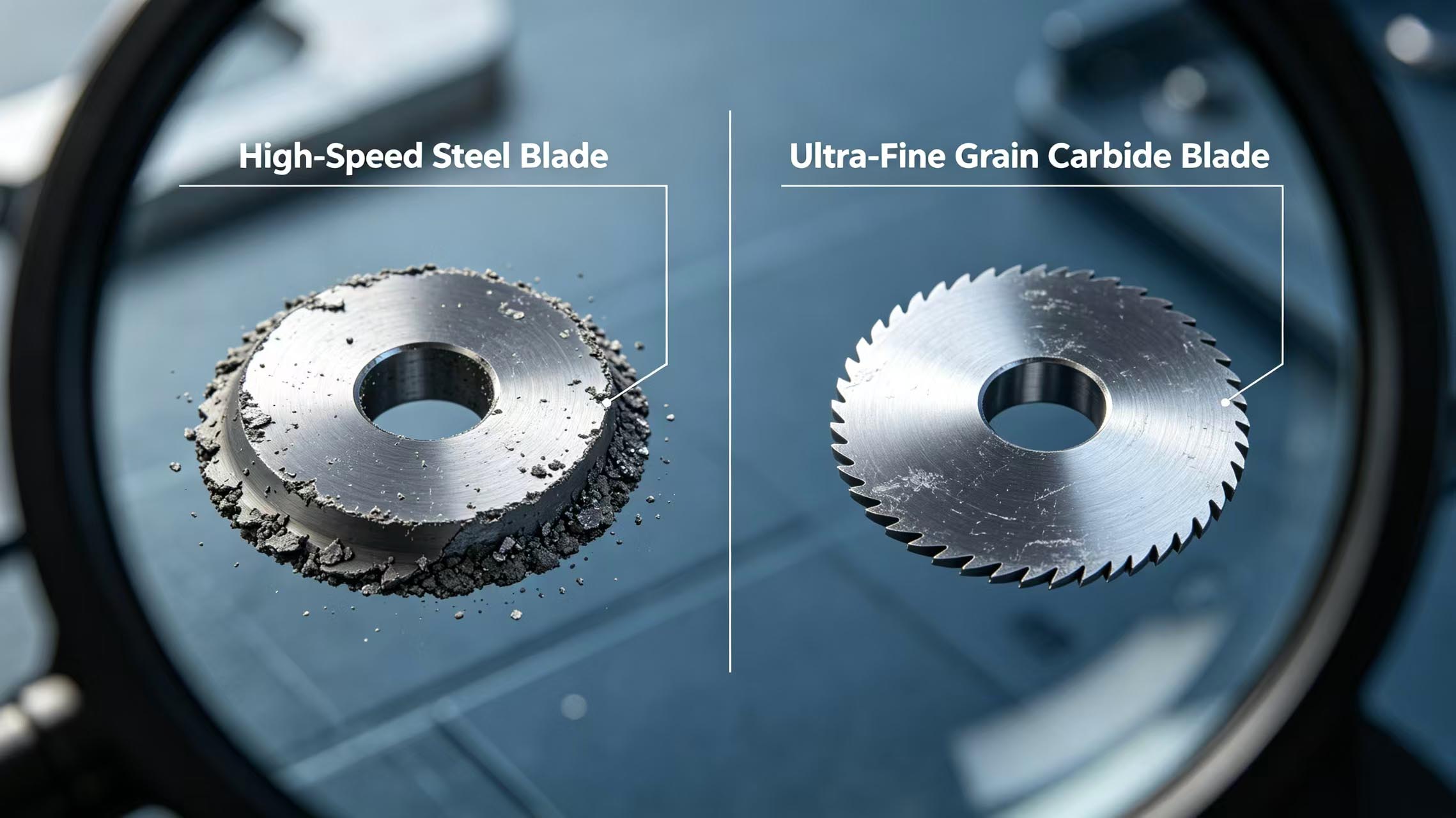
Currently, most paper mills still use high-speed steel rewinder slitting circular blades with hardness HRC58-62, which have limited life under high-speed, high-abrasion conditions. Mingbai Technology recommends upgrading to ultra-fine grain carbide circular blades with hardness HRA90-93 (equivalent to HRC68-75), offering wear resistance 3-5 times that of high-speed steel. The ultra-fine grain structure ensures more uniform carbide distribution, significantly improving resistance to micro-chipping. With appropriate edge angles, the slitting length per blade installation can increase from 8,000 meters to over 25,000 meters.
3. Coating Optimization — DLC Coating Reduces Friction and Adhesion
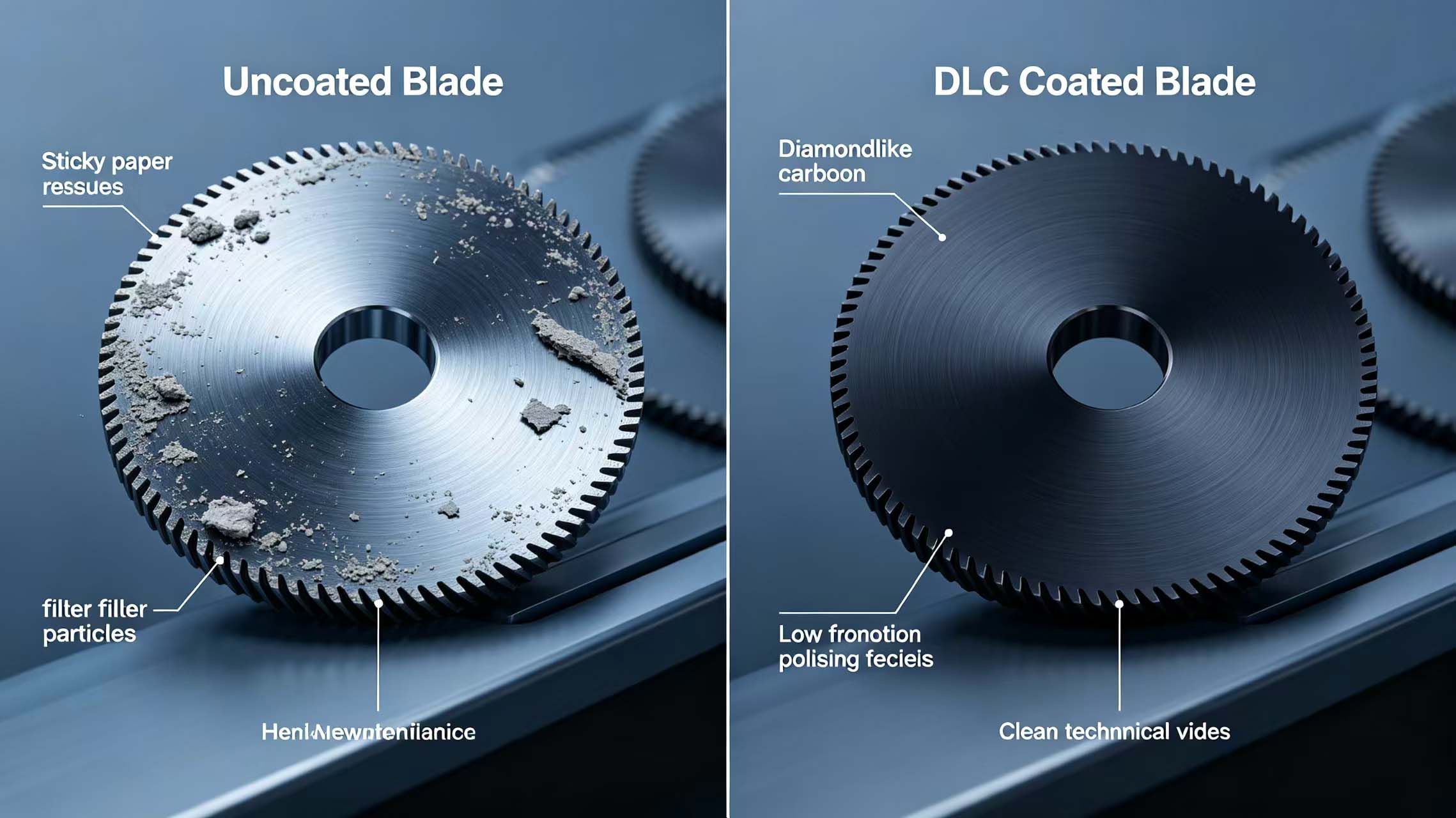
During rewinder slitting, adhesives and resins in the paper tend to form an adhesion layer on the edge surface, increasing friction resistance and accelerating edge dulling. DLC coated rewinder circular blades (diamond-like carbon coating) have an extremely low friction coefficient (0.05-0.1), effectively reducing friction heat between the edge and the paper, minimizing adhesion buildup, while also increasing edge surface hardness for more uniform and slower wear. Test data shows that DLC coated blades last 60%-80% longer than uncoated blades on high-speed rewinders.
4. Edge Geometry Optimization — Balancing Sharpness and Durability
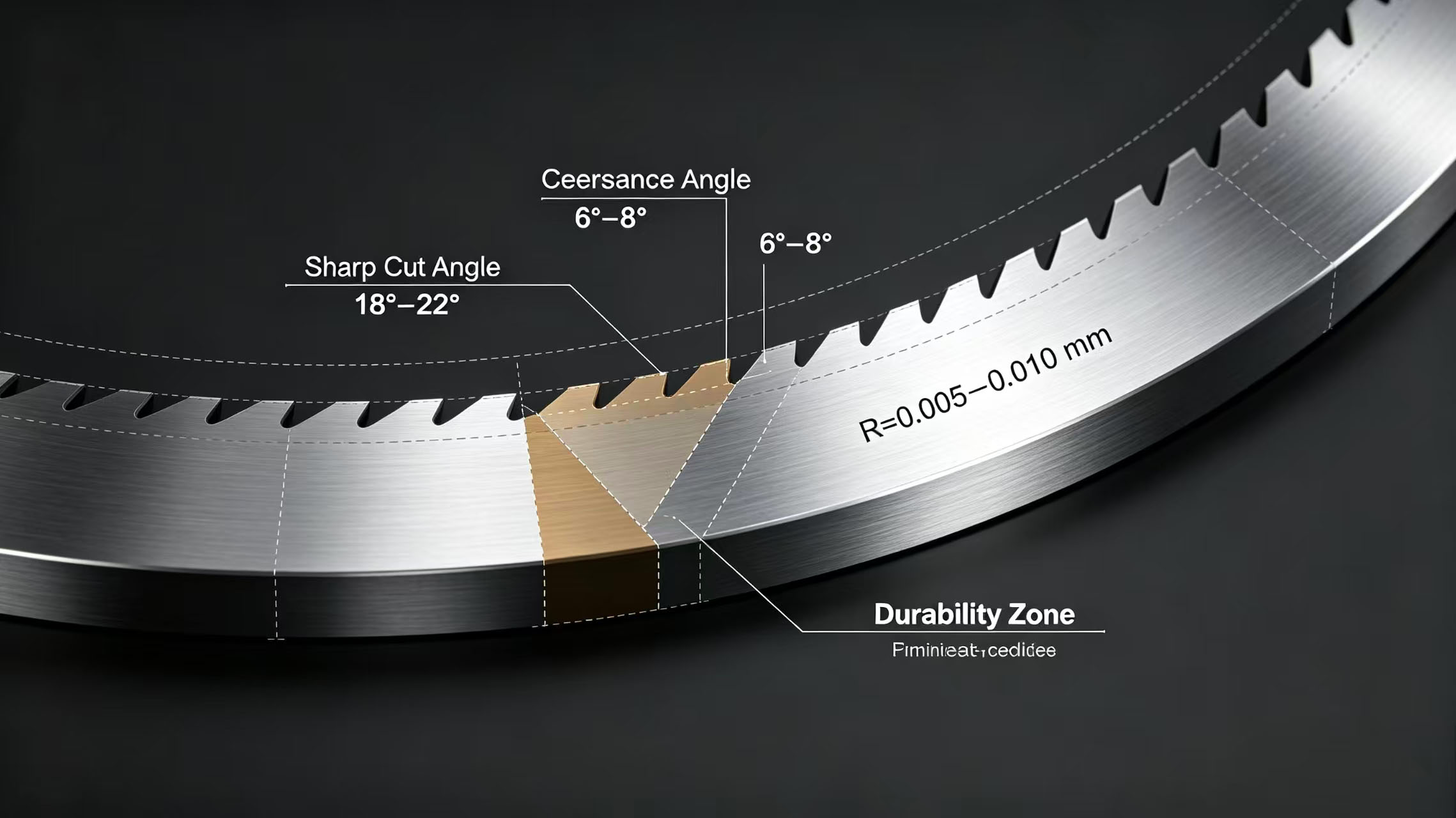
The edge angle of rewinder blades directly affects cutting resistance and edge strength. An angle too small (<15°) is sharp but has low edge strength, prone to micro-chipping; an angle too large (>25°) increases cutting resistance and friction. Paper rewinder dedicated circular blades are recommended with an angle of 18°-22°, clearance angle 6°-8°, and micro-passivation (edge radius R=0.005-0.010mm). This combination ensures smooth slitting while effectively resisting abrasive impact — a key geometric parameter for extending life.
5. Installation Precision Control — Reducing Uneven Wear
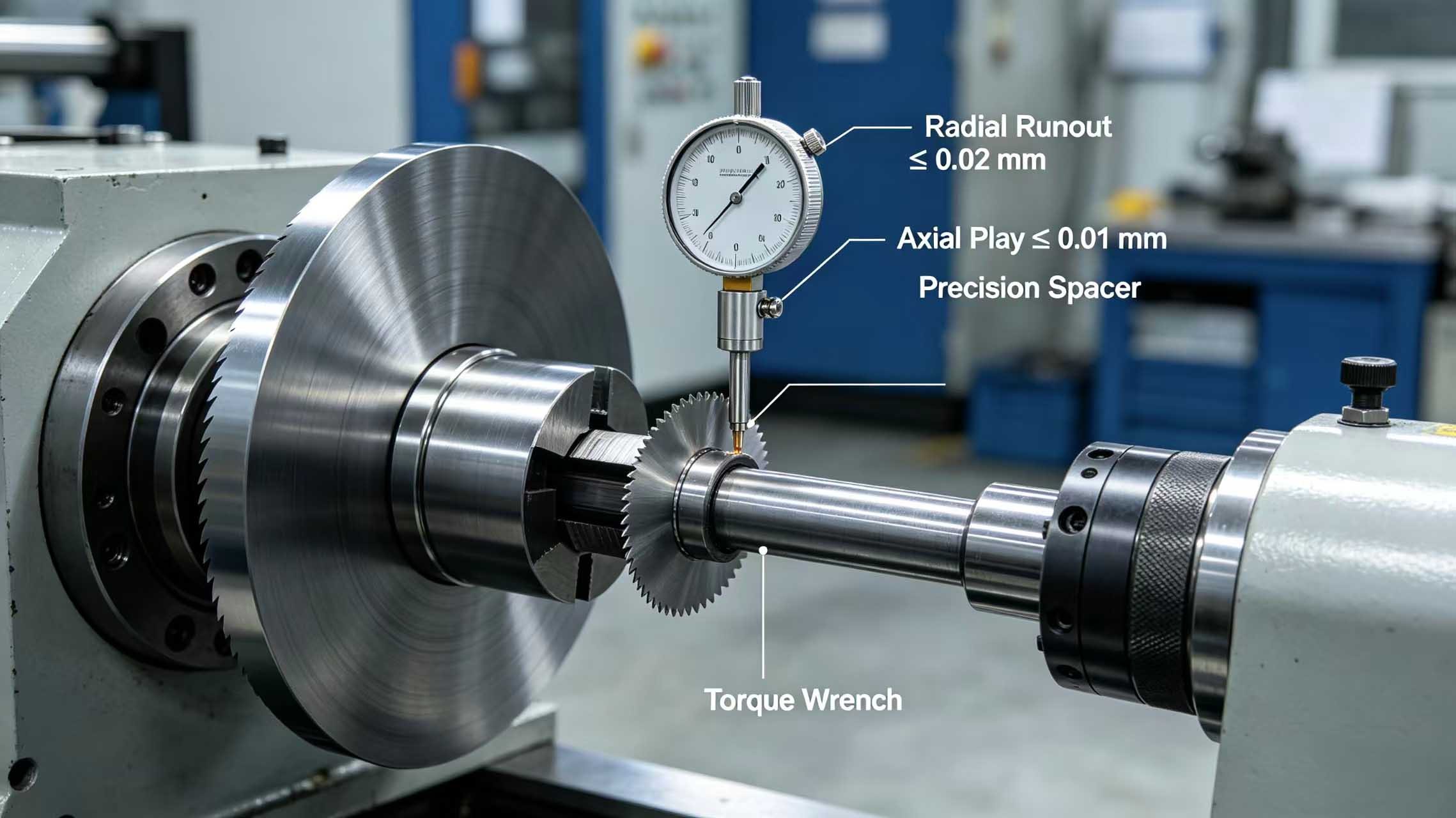
Eccentric installation or axial movement of the blade causes uneven localized stress on the edge, resulting in uneven wear — one side severely worn while the other remains sharp, but overall life is prematurely terminated. High-precision rewinder blades require installation with radial runout ≤ 0.02mm and axial movement ≤ 0.01mm. Precision spacers and torque wrenches are recommended for tightening to avoid over-tightening or looseness.
6. Grinding Cycle Management — Proactive Maintenance Instead of Reactive Replacement
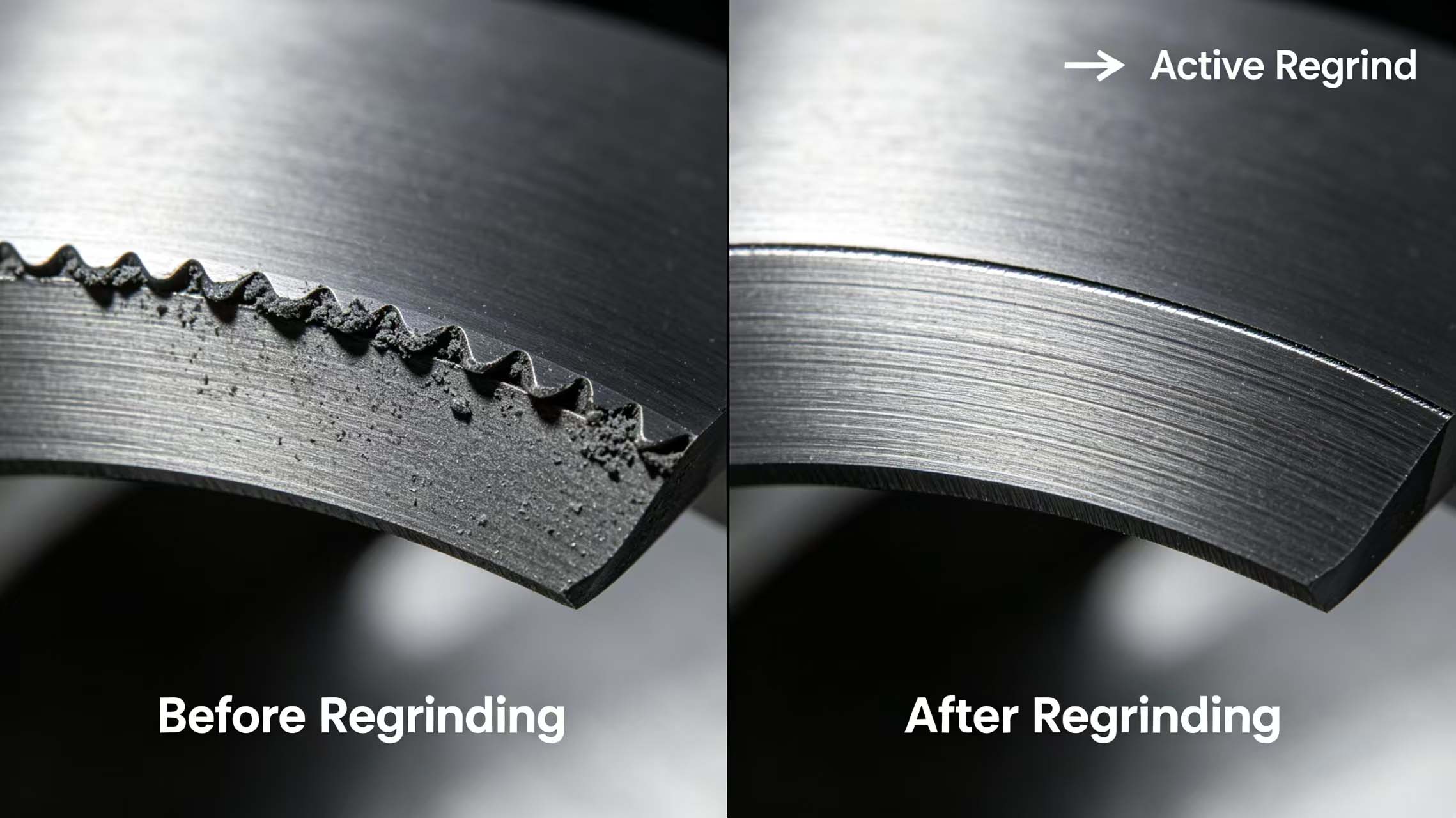
Do not wait until the blade is completely dull to replace it. Establish a "proactive grinding" system: when the slitting length reaches 80% of the empirical value, schedule grinding. Wear-resistant rewinder circular blades can restore over 95% of original performance after proper grinding, with cumulative life reaching 3-5 times that of a new blade. Mingbai Technology offers one-stop grinding + recoating services to help customers maximize full-lifecycle blade value.
7. Case Comparison
A large paper mill originally used ordinary high-speed steel circular blades on its rewinder, changing blades 3 times per shift with a single slitting length of about 6,000 meters. After switching to Mingbai Technology's ultra-fine grain carbide rewinder circular blades (with DLC coating, 20° edge angle), the single slitting length stabilized above 25,000 meters, blade change frequency dropped from 3 times per shift to less than 1 time, overall blade life increased by 4 times, and annual tooling cost and downtime losses were reduced by over 150,000 RMB.
Conclusion
Frequent replacement of rewinder circular blades in the paper industry is not an inevitable fate. Through material upgrade (carbide replacing high-speed steel), coating optimization (DLC reducing friction), edge geometry optimization (18°-22° + micro-passivation), installation precision control, and proactive grinding management, doubling service life is a completely achievable goal. Mingbai Technology is ready to help you reduce tooling costs and improve slitting efficiency with professional blade solutions.
FAQ Module:
Q1: How much more expensive are carbide rewinder blades compared to high-speed steel? Is it worth it?
A: Carbide blades typically cost 2-3 times more than high-speed steel, but their life is 3-5 times longer. In terms of cost per slitting length, carbide's overall cost of use is 40%-60% lower than high-speed steel, with significantly fewer downtime blade changes — making it highly worthwhile.
Q2: Will DLC coating peel off quickly in paper slitting?
A: DLC coating has good adhesion and is unlikely to peel off under the low-impact conditions of paper slitting. Coating failure typically manifests as gradual wear rather than peeling, with a life reaching over 80% of the blade substrate life. Mingbai Technology uses PVD + plasma-assisted deposition processes to ensure excellent coating adhesion.
Q3: Why is 18°-22° recommended for rewinder blade edge angles?
A: Below 15°, edge strength is insufficient and prone to chipping; above 25°, cutting resistance increases and friction intensifies. 18°-22° is the optimal range balancing sharpness and edge strength. Combined with micro-passivation, it maximizes life while maintaining cut quality.
Q4: How often should rewinder blades be ground?
A: It is recommended to determine the grinding cycle based on slitting length. For carbide blades, schedule grinding when the initial slitting length reaches 80% of the design life (about 20,000 meters), and then every 15,000-18,000 meters thereafter. Adjustments should be made based on paper weight, filler content, and actual wear conditions.
Q5: Can coated blades maintain coating effectiveness after grinding?
A: Grinding removes the coating at the edge, exposing the substrate. It is recommended to recoat after grinding, or reserve coating thickness allowance when purchasing. Mingbai Technology offers grinding + recoating package services to ensure blade performance is restored to new condition after each grinding.
Website: www.mingbaiblade.com