Choosing the right paper tube packaging supplier is an important decision for brands, wholesalers, and packaging distributors. A suitable supplier does more than manufacture cardboard tubes. It should understand your product requirements, recommend appropriate materials and structures, provide reliable customization services, and maintain consistent production quality for repeat orders.
For B2B buyers, comparing paper tube packaging suppliers involves several factors, including manufacturing capabilities, material selection, customization options, minimum order quantities (MOQ), sample development, quality control, lead times, and international shipping experience. Focusing only on the unit price can lead to unexpected costs, inconsistent packaging quality, or delays in product launches.
So, how do you compare paper tube packaging manufacturers and identify a supplier that can support your long-term business requirements? This guide explains the key evaluation criteria and introduces the custom paper tube packaging solutions available from SengKen.
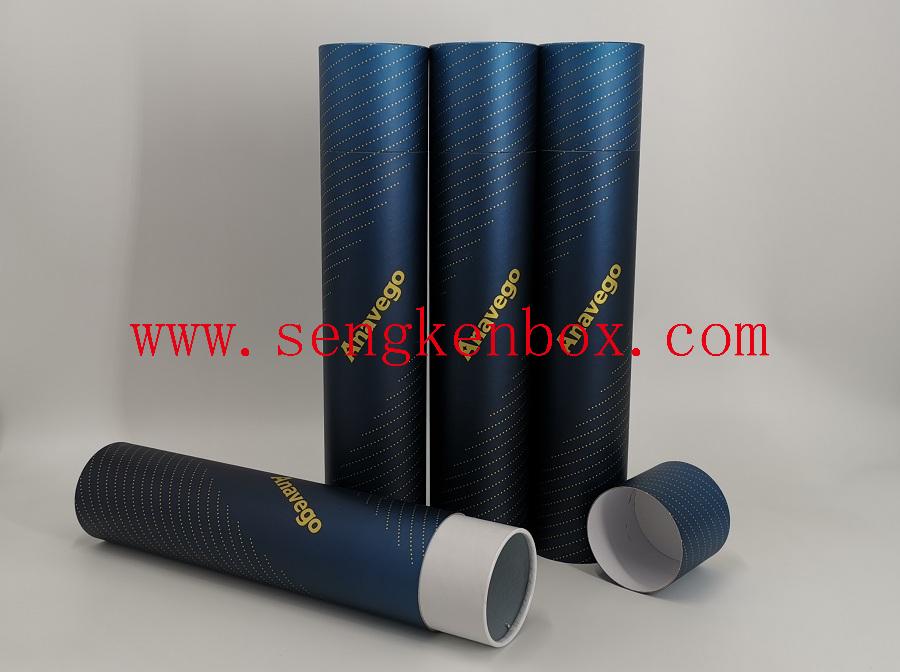
Why Is Choosing the Right Paper Tube Packaging Supplier Important?
Paper tube packaging is used across a wide range of industries, including food and beverage, tea and coffee, cosmetics, personal care, gifts, household products, and promotional merchandise. Although these products share a cylindrical packaging structure, their functional and visual requirements can be very different.
A tea brand may need a paper canister with an aluminum foil liner to help protect product freshness. A cosmetics company may prioritize premium printing, surface finishes, and a well-fitted inner tray. Meanwhile, a manufacturer shipping posters or artwork may require a rigid cardboard mailing tube that provides sufficient protection during transportation.
These differences mean that one standard paper tube design cannot meet every packaging requirement.
An experienced paper tube packaging supplier should be able to evaluate the intended application and recommend suitable combinations of paper materials, wall thickness, dimensions, inner linings, lid structures, and printing processes.
For B2B buyers, choosing the right manufacturing partner can help achieve:
- More consistent packaging quality across production batches.
- Better product protection during storage and transportation.
- Packaging designs that match brand positioning and retail requirements.
- More efficient customization and sample development.
- Better coordination between packaging production and product launch schedules.
- More predictable procurement costs for repeat orders.
Therefore, supplier evaluation should consider the complete manufacturing and service process rather than relying on product photographs or initial quotations alone.
Evaluate the Supplier's Paper Tube Manufacturing Capabilities
The first step when comparing paper tube packaging suppliers is to understand what they can actually manufacture. Some suppliers focus on standard cardboard mailing tubes, while others specialize in composite paper cans, food packaging containers, or premium customized packaging.
Before requesting a quotation, check whether the supplier has experience with the specific structure and application you need.
Product range and manufacturing experience
A supplier with a broader paper tube product range may be better equipped to handle different packaging requirements. Check whether the manufacturer can produce rolled edge paper tubes, composite paper cans, sealed paper canisters, shaker lid paper tubes, and other cylindrical packaging structures.
It is also useful to review previous projects in your industry. Experience with food packaging, for example, may be relevant when your product requires specific inner lining materials and sealing structures.
SengKen provides various cylindrical packaging solutions, covering standard paper tubes, rolled edge paper cans, composite paper canisters, and customized packaging structures. Buyers can explore the Cylinder Paper Tube Packaging category to review the available product directions.
Production flexibility
Not every B2B order requires the same production quantity. A growing brand may need a small initial order to test market response, while an established distributor may require larger production volumes with consistent specifications.
Ask whether the supplier can support sample development, small-batch customization, and larger production orders. Also confirm whether the same material and printing specifications can be maintained for repeat orders.
Manufacturing and customization scope
A capable supplier should be able to explain which processes are handled in-house and which are outsourced. This helps buyers understand production coordination, quality responsibilities, and potential lead-time differences.
Important capabilities to check include paper tube forming, cutting, printing, surface finishing, lid assembly, lining application, and final packaging.
Compare Paper Tube Materials and Structural Options
Material selection directly affects the appearance, strength, functionality, and cost of paper tube packaging. When comparing suppliers, buyers should ask for detailed material information rather than accepting a general description such as kraft paper tube or eco-friendly cardboard packaging.
Kraft paper and cardboard
Kraft paper is commonly used in paper tube packaging because of its natural appearance and versatility. Different paper grades and thicknesses can be selected depending on the required structure, printing design, and packaging application.
White cardboard, specialty paper, and coated art paper can also be used to achieve different visual effects and surface qualities.
Composite paper materials
Composite paper tubes combine multiple material layers to achieve specific packaging functions. Depending on the product requirements, the structure may include kraft paper, white paper, aluminum foil, coated paper, or other functional layers.
For food and powder products, an appropriate inner liner can help provide moisture resistance, aroma retention, or other barrier functions. However, the actual protection level depends on the complete material structure, lid sealing design, and product testing.
Paper tube wall thickness and rigidity
Wall thickness and structural design influence the tube's resistance to compression, deformation, and handling damage. Products that require long-distance shipping or repeated stacking may need a stronger structure than lightweight retail packaging.
Lid and closure options
The lid is another important part of paper tube packaging. Common options include cardboard lids, plastic lids, tinplate lids, easy-open ends, and aluminum foil easy-peel lids.
The correct closure should be selected according to the product's storage requirements, opening experience, and packaging line conditions.
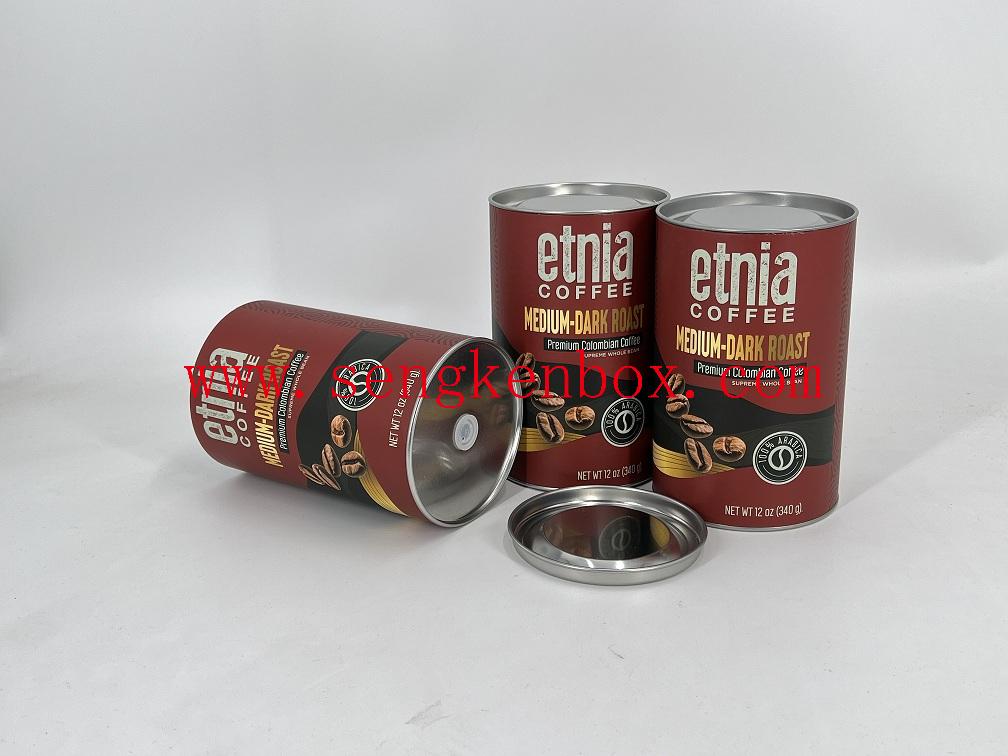
For products requiring a more protective paper canister structure, buyers can review Good Airtight Paper Canister Packaging to compare available sealing and liner configurations.
Check Customization and OEM & ODM Capabilities
For brands and wholesale buyers, packaging is not simply a container. It is also part of product presentation, brand recognition, and the customer experience.
When comparing custom paper tube packaging suppliers, check whether they can adapt the product to your brand artwork, dimensions, packaging structure, and target market.
Custom dimensions and shapes
Paper tube diameter and height should be matched to the product being packed. A tube that is too large may allow excessive movement, while an undersized container can make filling and removal difficult.
Ask suppliers whether they can manufacture custom diameters and heights or offer existing size options. It is also important to confirm dimensional tolerances and whether samples can be produced before mass production.
Custom printing and branding
Printing quality plays an important role in the final appearance of paper tube packaging. Common customization options include CMYK printing, Pantone colors, logo printing, and customized artwork.
For premium packaging, buyers may also consider hot foil stamping, embossing, debossing, UV coating, and matte or gloss lamination.
Before production, provide clear artwork files and confirm color references, printing positions, and surface finishing details.
Customized inner structures and accessories
Some packaging projects require more than a simple cylindrical container. Depending on the application, suppliers may need to provide inner trays, protective inserts, liners, desiccant spaces, or specially designed closures.
These details are particularly important for cosmetics, gift packaging, food products, and fragile items.
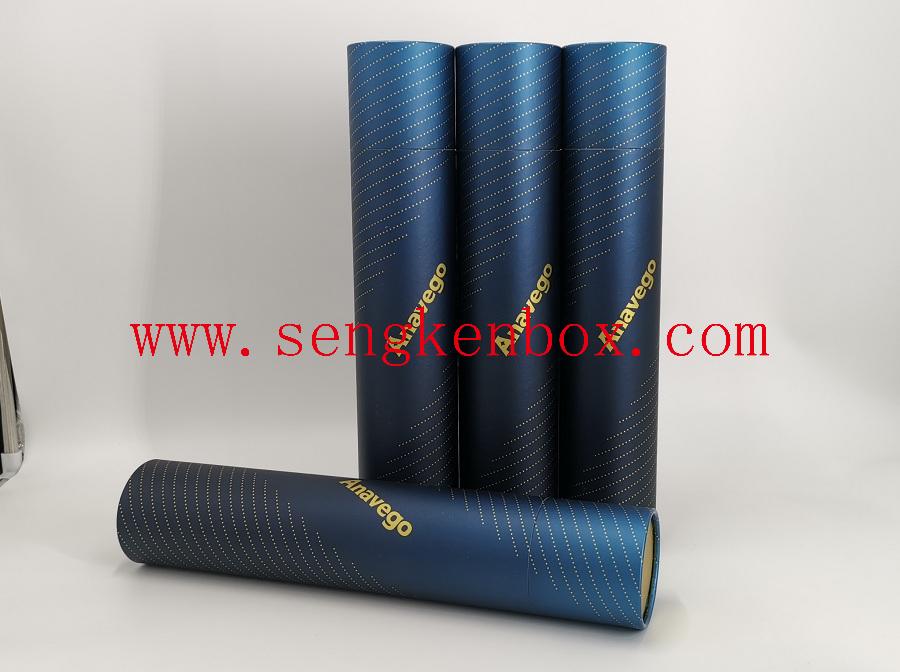
For projects requiring distinctive rolled-edge construction and custom printed designs, explore Rolled Edge Paper Tube Packaging to understand the available product styles.
Compare MOQ, Sampling, and Production Lead Times
Minimum order quantity, sample development, and production lead time are important commercial factors when selecting a paper tube packaging manufacturer.
A low unit price may not be practical if the required MOQ is too high. Similarly, a supplier that cannot provide samples or communicate a realistic production schedule may create problems for a brand preparing a product launch.
Minimum order quantity
MOQ varies depending on the product structure, material, printing process, and customization requirements. Standard packaging products may have different order requirements from fully customized paper tubes.
When comparing quotations, ask whether the MOQ applies to each size, design, color, or combined order. Also confirm whether different artwork versions can be included in one production order.
Do not assume that all products from the same supplier have the same MOQ. For example, SengKen's published product listings show different minimum quantities for different packaging structures. The MOQ for each specific design should be confirmed directly before ordering.
Sample development
Requesting a sample is one of the most useful ways to evaluate a packaging supplier. A physical sample allows buyers to check dimensions, material feel, lid fit, printing quality, and overall construction before approving mass production.
For customized orders, confirm whether the supplier can produce a pre-production sample based on your artwork or reference packaging. Clarify sample costs, sample timing, and whether sample charges can be credited against a later bulk order.
Production lead time
Ask for separate estimates for sample development, artwork confirmation, material preparation, mass production, and shipping. This provides a more realistic understanding of the total procurement timeline.
Lead times may change depending on order quantity, material availability, printing complexity, and seasonal production demand.
Assess Quality Control and Packaging Performance
Packaging quality should remain consistent from the first order to subsequent production batches. For B2B buyers, inconsistent dimensions, printing differences, weak tube structures, or poorly fitted lids can affect filling operations, product presentation, and customer satisfaction.
Before selecting a supplier, ask how product quality is checked during manufacturing and before shipment.
Dimensional consistency
Check the tube's internal and external diameter, height, wall thickness, and lid fit. These specifications should be clearly documented and confirmed before production.
Structural strength
Depending on the intended application, packaging may need to withstand stacking, handling, and transportation pressure. Ask whether the supplier can recommend an appropriate tube structure and provide relevant test information where required.
Printing and surface quality
Inspect logo clarity, color consistency, printing alignment, coating uniformity, and surface finish. For repeat orders, an approved sample or color reference can help reduce unnecessary variation.
Sealing and barrier performance
For food, tea, coffee, and powder packaging, evaluate the inner liner, lid structure, and sealing performance. Moisture resistance, oxygen barrier properties, aroma retention, and light protection should be assessed according to the actual product requirements.
Do not rely on descriptions such as airtight or moisture-proof alone. Ask for relevant test reports or specifications if the application requires measurable barrier performance.
Food-contact compliance
If the paper tube is intended for direct food contact, confirm that the inner liner, adhesive, printing materials, and other relevant components comply with the regulations of the target market.
Request supporting documentation for the complete packaging structure rather than assuming that kraft paper or an aluminum foil liner automatically makes the finished package food-safe.
Evaluate Export Experience and Supplier Communication
For international B2B procurement, a paper tube packaging supplier should be able to coordinate more than manufacturing. Clear communication, documentation, packing arrangements, and shipping coordination are also important parts of the purchasing process.
International order experience
Ask whether the supplier has experience serving overseas distributors, importers, brand owners, and packaging wholesalers. Familiarity with export orders can help reduce misunderstandings about product specifications, packaging requirements, and shipping arrangements.
Protective export packaging
Paper tubes and paper canisters should be packed appropriately to reduce the risk of deformation, surface damage, and moisture exposure during transportation. Confirm the export carton specifications and whether additional protection is required for long-distance shipments.
Communication and order follow-up
A reliable supplier should respond clearly to questions about materials, specifications, samples, production progress, and delivery arrangements. Written confirmation of important details can also reduce the risk of misunderstandings during production.
Long-term supply support
For buyers planning repeat orders, it is useful to understand whether the supplier can retain approved specifications, coordinate repeat artwork, and maintain consistent product requirements across future batches.
How to Compare Paper Tube Packaging Suppliers More Effectively
Once you have collected quotations and product information from different manufacturers, organize the details into a supplier comparison sheet. This makes it easier to identify differences that may not be obvious from the quoted unit price.
The following comparison framework can be used for B2B paper tube packaging procurement:
| Evaluation Criteria | What to Check | Why It Matters |
|---|---|---|
| Manufacturing capability | Product range, production processes, industry experience | Confirms whether the supplier can handle your project. |
| Material selection | Paper grade, wall thickness, liner, lid materials | Affects packaging performance and cost. |
| Customization | Size, printing, surface finishes, inserts | Supports product and brand requirements. |
| MOQ | Minimum quantity by design and specification | Determines purchasing flexibility. |
| Sampling | Sample availability, cost, and approval process | Reduces the risk of mass production errors. |
| Quality control | Dimensions, structure, printing, sealing tests | Supports batch consistency and product protection. |
| Lead time | Sampling, production, and delivery schedule | Helps coordinate procurement and product launches. |
| Export support | Export packing, shipping, and documentation | Reduces international order coordination risks. |
It is also useful to compare the total landed cost rather than the quoted unit price alone. Sampling charges, tooling or setup costs, printing fees, packaging, freight, and potential rework should all be considered when calculating the actual purchasing cost.
A supplier that offers a slightly higher unit price may still provide better overall value if it delivers more suitable materials, reliable quality, and smoother order coordination.
Why Consider SengKen for Custom Paper Tube Packaging?
For B2B buyers looking for a paper tube packaging manufacturer in China, SengKen provides a range of customized paper packaging solutions for different industries and commercial applications.
Xiamen SengKen Industry & Trade Co., Ltd. has more than 20 years of experience in packaging printing and manufacturing. The company reports that its products have been exported to more than 100 countries and regions, with over 1,000 customer customization solutions developed.
Its packaging portfolio includes different cylindrical paper packaging structures, composite paper cans, paper canisters, gift packaging, and related packaging products.
Multiple paper tube packaging options
SengKen offers different paper tube structures for various packaging requirements, including rolled edge paper tubes, unsealed paper cans, airtight paper canisters, and shaker lid paper tubes.
These options allow buyers to select packaging based on the product being packed, desired opening method, storage conditions, and brand presentation.
Flexible customization services
Customization options include dimensions, paper materials, inner liners, lid structures, logo printing, and surface finishing. Printing and finishing processes can include CMYK and Pantone colors, hot stamping, embossing, UV coating, and matte or gloss finishes, depending on the selected product and production requirements.
Support for different order quantities
SengKen supports sample development, small-batch customization, and larger production orders. MOQ and delivery schedules depend on the specific product structure, materials, and customization requirements.
Packaging solutions for different industries
The company's product range covers applications such as tea, coffee, food products, cosmetics, gifts, household products, and industrial packaging.
For example, brands looking for packaging with controlled dispensing can explore Shaker Lid Paper Tube Packaging, while food and powder brands can discuss suitable liners and sealing structures for their products.
Rather than selecting a standard package based only on appearance, buyers can share their product dimensions, filling requirements, artwork, and target market with SengKen to evaluate a suitable packaging configuration.
What Information Should You Prepare Before Requesting a Quotation?
Providing clear project information helps a paper tube packaging supplier evaluate your requirements and prepare a more accurate quotation.
Before contacting a manufacturer, it is helpful to prepare the following details:
- Product application: Explain what will be packed inside the paper tube, such as tea, coffee, cosmetics, food, gifts, or industrial products.
- Dimensions: Provide the required diameter, height, and internal space requirements.
- Material preferences: Specify kraft paper, white cardboard, specialty paper, aluminum foil liner, or other preferred materials if known.
- Structure and closure: Describe the desired tube construction, lid type, opening method, and sealing requirements.
- Printing artwork: Provide your logo, artwork files, color references, and preferred surface finishes.
- Order quantity: Indicate the estimated quantity for the first order and potential repeat purchases.
- Target market: Mention the destination country and any applicable food-contact, labeling, or packaging compliance requirements.
- Delivery expectations: Provide the target delivery date and shipping destination.
If you have an existing packaging sample, reference photograph, or technical drawing, sharing it with the supplier can make the quotation and sample development process more efficient.
To discuss your requirements directly, visit SengKen Contact Us and provide your packaging specifications for further evaluation.
Frequently Asked Questions About Paper Tube Packaging Suppliers
What should I look for when choosing a paper tube packaging supplier?
Evaluate the supplier's manufacturing experience, material options, customization capabilities, MOQ, sample development, quality control, production lead time, and export support. The supplier should also understand the specific requirements of your product and target market.
What is the difference between a paper tube manufacturer and a packaging trading company?
A manufacturer generally has direct involvement in production processes, while a trading company sources products from external factories. However, business models can vary. Buyers should verify the actual production arrangements, quality responsibilities, and communication process before placing an order.
Can paper tube packaging suppliers provide custom sizes and printing?
Yes. Many custom paper tube manufacturers offer adjustable diameters and heights, custom artwork, logo printing, and surface finishing. SengKen supports customized dimensions, CMYK and Pantone printing, hot stamping, embossing, and other finishing options depending on the product structure.
What is the MOQ for custom paper tube packaging?
MOQ depends on the tube structure, dimensions, materials, printing requirements, and production process. Some standard products may have lower minimum quantities, while complex customized packaging may require larger orders. Always request the MOQ for your specific design.
Can I request a sample before mass production?
Yes. Sample development is an important step in custom packaging procurement. Buyers should confirm the sample cost, production time, material specifications, and approval process before proceeding with bulk production.
What materials are commonly used for paper tube packaging?
Common materials include kraft paper, white cardboard, specialty paper, coated art paper, aluminum foil composite materials, and different functional inner liners. The material combination depends on the packaging application and required performance.
Are paper tubes suitable for food packaging?
Yes. Paper tubes can be designed for food packaging using suitable food-contact materials, inner liners, adhesives, and closure structures. The complete packaging construction must meet the applicable food-contact regulations in the target market.
How long does custom paper tube packaging production take?
Production time depends on order quantity, material availability, structural complexity, artwork approval, and printing requirements. Sample development and mass production should be discussed separately to establish a realistic delivery schedule.
Why should B2B buyers compare total packaging costs instead of unit prices?
The total procurement cost may include sampling, printing setup, tooling, packaging, shipping, and quality-related expenses. Comparing these costs provides a more accurate assessment of supplier value than evaluating the unit price alone.
Does SengKen support OEM and customized paper tube packaging orders?
Yes. SengKen provides customized paper tube packaging services, including adjustments to dimensions, materials, printing, surface finishes, and packaging structures. Sample development, small-batch customization, and larger production orders are available subject to project requirements.